
You Got a Pay Rise. So Why Does April Feel More Expensive?
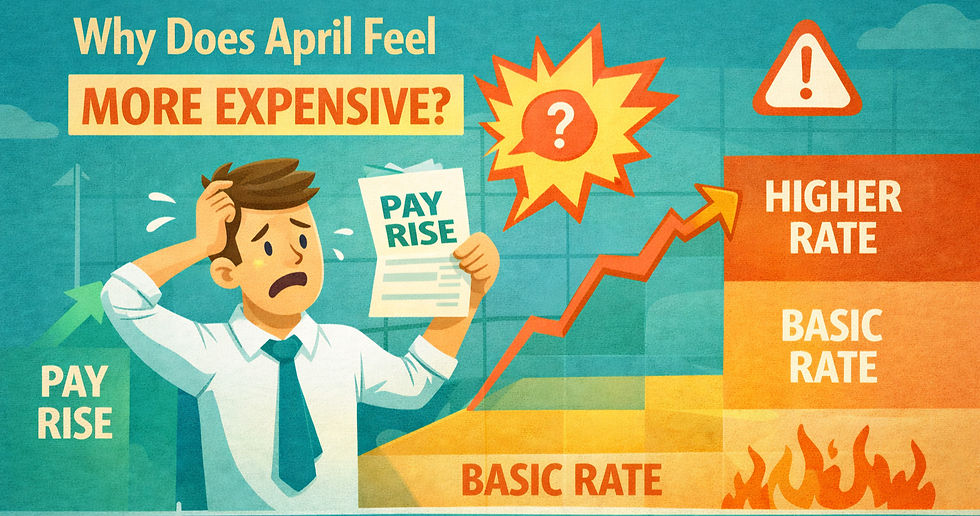
It happens every April to a surprising number of people on good salaries. The payslip arrives, there's technically more money going in, and somehow… it doesn't feel like it. Maybe it's barely noticeable. Maybe the numbers look right but the bank balance tells a different story.
If this sounds familiar, you're not imagining it.
The UK tax system has become rather good at taking more from you without ever announcing a rate rise. And April 2026 is one of the clearest examples of that in recent memory.
Why does a pay rise sometimes leave you feeling worse off? When income tax thresholds are frozen while wages rise, more of your income gets pulled into higher tax bands each year, without any change to the rates themselves. This is called fiscal drag. Combined with higher dividend taxes and persistent frozen allowances, many higher earners are effectively paying more in 2026/27 without anyone calling it a tax increase.
The threshold freeze is a stealth tax — and it's been running since 2021
Here's what most people on good salaries don't fully register: the personal allowance (the amount you can earn before paying income tax) has been stuck at £12,570 since 2021. The higher rate threshold (where you start paying 40%) has been frozen at £50,270 for the same period. According to the Office for Budget Responsibility, the government has now extended this freeze until at least 2031.
That means a full decade of thresholds going nowhere.
Wages, meanwhile, have moved. If you were earning £48,000 in 2021 and have had reasonable pay reviews since, you might now be earning closer to £54,000 or £55,000. Nothing dramatic happened. But you've gone from safely in the basic rate band to paying 40% on a meaningful chunk of your income, without anyone sending you a letter or changing a single rate.
This is fiscal drag. It's not dramatic or visible. It just quietly works against you in the background.
April 2026 makes this sharper than usual
The new tax year started on 6 April, and a few things have landed at once.
The threshold freeze continues. No change. Still £12,570 personal allowance, still £50,270 for the higher rate threshold. If your employer gave you a pay rise in March, congratulations — more of it is now taxable.
Dividend tax has risen. If you receive dividends outside of an ISA, whether as a company director, through an investment portfolio, or from a side business, you'll be paying more from this month. The basic rate on dividends has risen to 10.75% and the higher rate to 35.75%. For someone taking £30,000 in dividends, that change adds up to several hundred pounds extra per year. Not catastrophic. But not nothing.
The dividend allowance has shrunk dramatically. A few years ago, the first £5,000 of dividend income was tax-free. It's now £500. That's a 90% reduction. Many people haven't fully absorbed that this happened, let alone planned around it.
Inflation is still running at around 3%, according to ONS data. Which means even if your pay rise tracked inflation reasonably well, frozen thresholds have ensured the government's share of your income has grown faster than yours has.
"A pay rise that barely shows up in your take-home usually means the tax system got there first."

What this actually looks like in practice
It's worth making this concrete, because "fiscal drag" can sound abstract.
Imagine someone earning £52,000. In 2021, they'd have been paying 40% on around £1,730 — the slice above the frozen higher-rate threshold. By 2026, if their salary has tracked modest inflation to around £57,000, they're now paying 40% on £6,730. That's several hundred pounds more in tax per year purely because the threshold didn't move, not because anyone raised a rate.
Now add in: if that same person takes some dividends outside an ISA, and their employer has passed on some of the national insurance increase through slower pay reviews, the picture gets a little more dispiriting still.
None of this is about catastrophe. The personas I work with typically have household incomes that mean this is a frustration, not a crisis. But frustration compounds. And more importantly, there are usually things you can do about it — if you know what's happening.

The three places most people can reclaim ground
This isn't exhaustive, and what makes sense depends entirely on your own setup. But in my experience with clients navigating this, three areas come up most consistently.
Your pension is still one of the most powerful tools available. Higher-rate taxpayers get 40% relief on pension contributions. That means for every £600 you put in, the government adds £400, taking your effective cost to £600 to build £1,000 of pension. If your total income is near the £100,000 mark, contributions can also protect your full personal allowance (which starts to taper above that figure, disappearing entirely at £125,140). Salary sacrifice, where available, does this even more efficiently because it also reduces your NI liability.
Your ISA allowance has just reset. As of 6 April, you have a fresh £20,000 to put into an ISA this year. That's relevant here because ISAs shelter both income and gains from tax entirely. Dividends inside an ISA? Tax-free. Growth inside a stocks and shares ISA? Tax-free. Given that dividend tax has just risen again and thresholds aren't moving, the ISA wrapper has genuinely become more valuable, not less. If you've been meaning to understand how ISAs actually work and when to use them, this is the year that question matters more than it has before.
Understanding where you actually stand. This sounds basic. In practice, many people earning good money have a rough sense of their salary and a vaguer sense of everything else — dividends, pension contributions, savings interest, the threshold picture. The value of getting clarity on the full picture isn't just emotional (though it is that). It's that you can't make good decisions about which levers to pull if you don't know where you are. As I wrote in The Order to Fix Your Finances in Your 30s and 40s, clarity comes before optimisation, always.
A note on the world right now
It would feel strange not to acknowledge that April 2026 is happening against a backdrop that doesn't feel settled. Markets have been volatile. Energy prices are under pressure again. The economic outlook has been revised down. If you've been finding it harder to think clearly about your own finances, let alone take action, that's not weakness. It's a reasonable response to a lot of noise coming from a lot of directions.
What I'd gently push back on is the instinct to wait until things feel calmer before sorting your money out. Things may feel calmer eventually. But the threshold freeze will still be running until 2031 regardless, and the ISA allowance you don't use this year won't carry over to next. The things you can control are worth doing precisely when everything else feels out of your hands.
Let's Get Your Numbers Making Sense
If reading this has left you thinking "I actually don't know how much this is affecting me specifically", that's both a completely normal place to be, and genuinely fixable.
A good starting point is a free Q&A call, where we can talk through your situation and figure out whether there's an obvious quick win or a more considered review that would serve you better. No obligation, no agenda, just a clear conversation.
If you'd prefer to go deeper in one go and come away with a full picture of your personal position and a prioritised plan, that's what the Insight Session is designed for.
Either way, the numbers will still be there in the morning. But they'll make a lot more sense once you know what's actually going on inside them.
About the author: Vig Sivagnanam is The UK Money Coach, helping professionals and families align their money with the life they actually want. He works with clients across the UK on financial clarity, planning, and implementation — without the jargon.



Comments